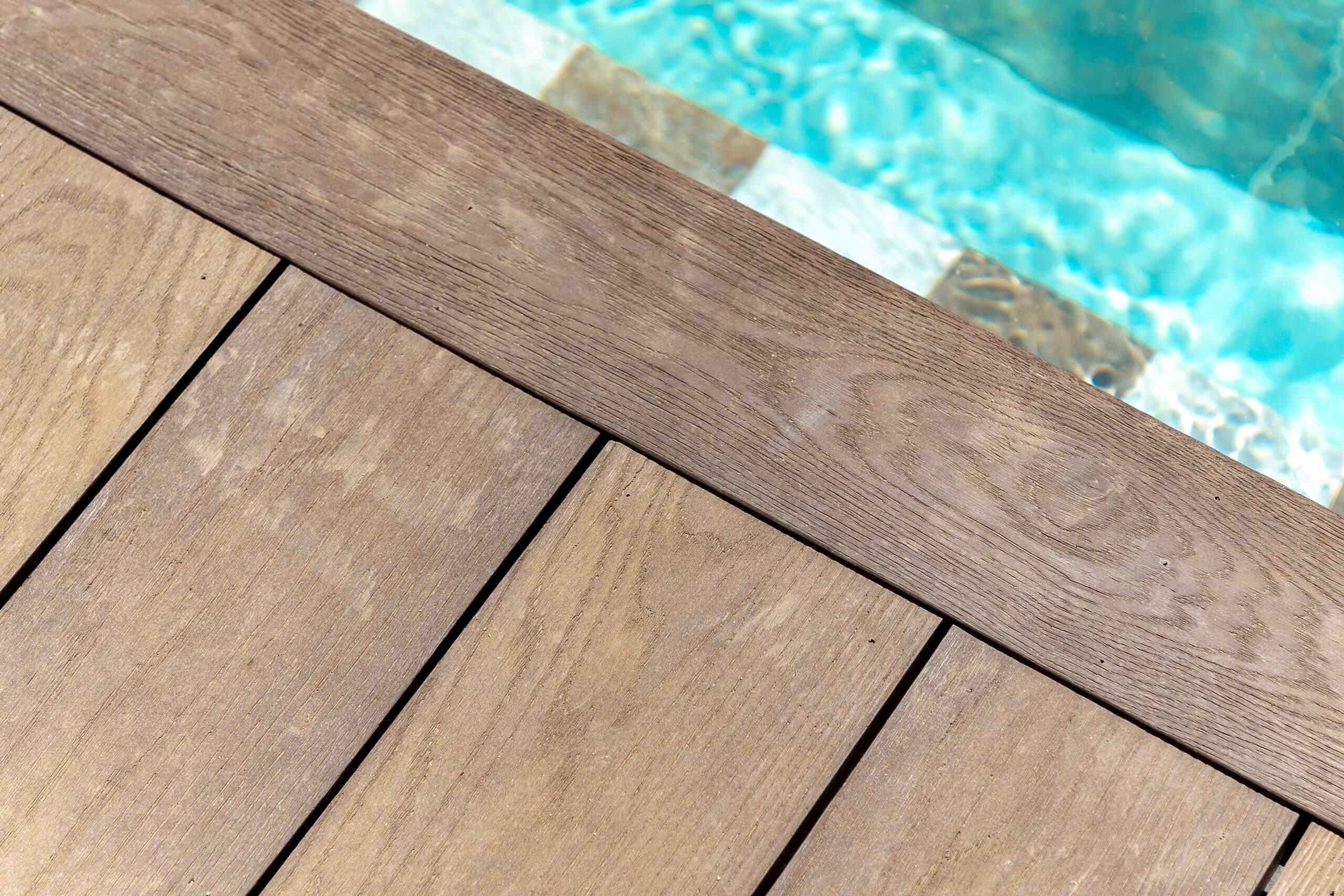
How to Choose the Perfect Decking Around Your Pool
It's the place to cool down on a hot summer's day, relax with a good book or spend hours enjoying the water with your family. But creating the perfect poolside setting involves more than aesthetics alone.
Bare feet, splashing water and children constantly jumping in and out of the pool call for a surface that not only looks beautiful, but can also cope with water, dries easily and remains comfortable underfoot. What if you could combine the appearance of real timber with a durable surface designed specifically for outdoor living?
Home » Safe, Stylish and Slip-Resistant: How to Choose the Perfect Decking Around Your Pool
25-08-2026
Patrick Smidt
Choosing the Right Material for Your Pool Deck
When designing a luxury deck around a swimming pool, hardwood and traditional composite decking are often among the first materials considered. Both can look attractive, but there are important practical differences to consider. Natural timber reacts to moisture and requires regular maintenance. Over time, it can also splinter and become slippery when surface growth develops.
The performance of conventional composite decking varies considerably depending on its composition and surface finish. Some products can become slippery when wet or noticeably warm when exposed to direct summer sun—both important considerations around a swimming pool where people regularly walk barefoot.
Grip and Safety Around the Pool
Millboard takes a different approach with its resilient Lastane® surface. This flexible surface provides excellent grip underfoot and has been designed to offer high slip resistance in both wet and dry conditions—an important consideration around swimming pools, hot tubs and other areas where water is part of everyday use.
Millboard is also completely wood-free, so it won’t rot or splinter like natural timber can. That means no painful splinters when walking barefoot and greater peace of mind when children are playing around the pool.
No Visible Screws, No Exposed Fixings
A premium pool deck looks its best when the fixings don't interrupt the surface. Around a swimming pool, concealed fixings also create a cleaner and more comfortable surface underfoot.
Millboard uses Durafix® screws, which are driven through the resilient Lastane® surface. Once installed, the surface closes back over the screw head, leaving the fixing virtually hidden. This is known as Millboard’s Lost Head® fixing system. The result is a clean, uninterrupted deck surface without rows of visible screw heads.
Designed for Everyday Poolside Living
Sun cream, melted ice cream, a spilled glass of rosé or splashes from the swimming pool: life around a pool inevitably leaves its mark. Millboard’s non-porous Lastane® surface is designed to resist everyday staining and makes spills and surface dirt easier to clean before they become a problem. Its UV- and weather-resistant construction also means there’s no need for the regular sanding, staining or oiling associated with natural timber. That gives you more time to enjoy your pool and less time maintaining the area around it.
Extend the Same Look Across Your Outdoor Space
Want to continue the same sense of calm and luxury beyond the deck? Combine Millboard decking with Millboard cladding on an adjoining wall, façade or pool house. By coordinating the materials, colours and textures, the pool deck and surrounding architecture can become part of one cohesive outdoor design.
Frequently Asked Questions About Pool Decking
Millboard requires relatively little routine maintenance. Unlike natural timber, there’s no need for periodic sanding, staining or oiling. For regular cleaning, warm water, mild soap and a soft brush are usually sufficient to remove everyday dirt from the surface. The non-porous Lastane® layer helps prevent common poolside substances such as sun cream and surface deposits from penetrating the material, making the decking easier to keep clean.
Millboard is designed for outdoor applications where regular exposure to water is expected, making it suitable for use around swimming pools. Its wood-free construction and non-porous surface mean water does not affect it in the same way as natural timber. As with any premium surface, spills and residues should be rinsed or cleaned in accordance with Millboard’s maintenance instructions.
The resilient Lastane® surface is designed to provide high levels of grip in both wet and dry conditions. This makes slip resistance one of the important reasons Millboard is well suited to swimming pools, hot tubs and other outdoor areas where the surface is regularly exposed to water. Correct installation, drainage and regular cleaning remain important for maintaining the best possible performance.
Planning requirements depend on the country, municipality, size and location of the swimming pool. In both the Netherlands and Belgium, certain private swimming pools can be installed without a planning permit when specific conditions are met, while other projects may require permission.
Because local regulations can differ, always check the current requirements with your local authority before starting your project.
This remnant stock has only been used for five days at a trade fair. The boards have not been screwed down, so they are still completely new. However, the floor is dirty and needs to be cleaned with soap and water before use. Includes fastening materials, transport with forklift truck, and VAT. Matching substructure available at extra cost.
Normal retail price: €12,500
Special offer price: €6,250